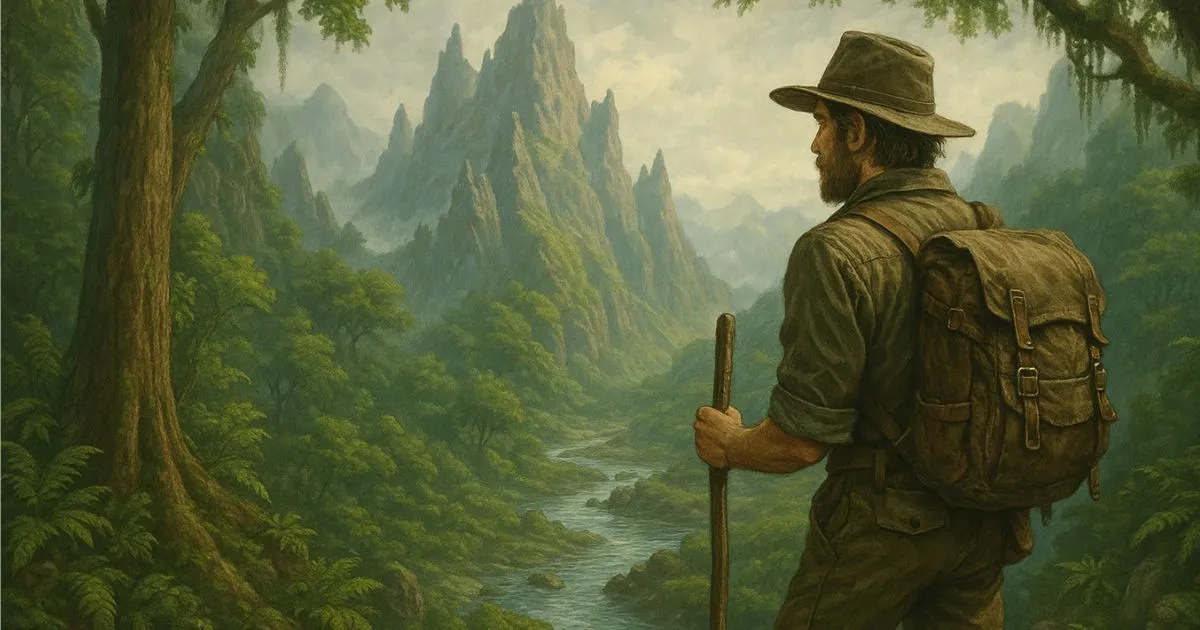

Human curiosity has always driven us to explore beyond what we know. From uncharted lands to inner realms of consciousness, the urge to discover is part of our nature. Daskusza Exploration embodies this impulse, representing a journey into the unknown — whether it’s hidden regions of the Earth, lost histories, or unexplored dimensions of thought and imagination.
Though the concept may appear mysterious or abstract, it offers a framework for discovery that is both personal and universal. In this article, we will explore the origins of Daskusza, its interpretations across geography, mythology, psychology, and digital creativity, as well as its significance in modern life. By understanding Daskusza Exploration, you gain insight into the value of curiosity, imagination, and responsible exploration.
What is Daskusza Exploration?
Daskusza Exploration is a broad concept that refers to venturing into unknown territories, whether physical, cultural, or psychological. Its definition is fluid and multi-layered:
- Physical Exploration: Some see Daskusza as a real, though rarely documented, land — remote valleys, forests, or mountain ranges yet to be fully mapped.
- Metaphorical Exploration: Others interpret it as a journey into the mind, self-discovery, or intellectual exploration.
- Cultural and Mythical Exploration: Daskusza also represents the search for lost knowledge, hidden civilizations, and folklore that may hold clues about human history.
- Creative and Digital Exploration: In the modern context, it serves as a canvas for creative storytelling, world-building, and speculative imagination.
The ambiguity of Daskusza contributes to its allure, making it both a challenge and a source of inspiration.
Historical and Mythical Background
Origins of the Term
The precise origin of the word “Daskusza” is unclear. Linguists speculate it may have roots in ancient Slavic or Central Asian languages. Historical mentions appear sporadically in obscure travel journals and local folklore dating back centuries.
Myth and Legend
In myths, Daskusza is often described as a lost land similar to Atlantis or El Dorado. Stories speak of hidden valleys, vanishing lakes, sacred groves, and ancient ruins. These narratives merge geography with spiritual significance, presenting Daskusza as both a place and a realm of hidden wisdom.
Such tales encourage exploration not only of the physical world but also of human imagination, collective memory, and spiritual insight.
Interpretations of Daskusza Exploration
1. Geographic and Physical Perspective
Some researchers treat Daskusza as a real geographic area, potentially located in Eastern Europe, Central Asia, or remote mountain ranges. Descriptions emphasize rugged peaks, dense forests, and secluded valleys — landscapes that escaped mapping or have been forgotten over time.
Physical exploration involves expeditions, mapping, and studying biodiversity, geology, or archaeology. Even if Daskusza is never fully located, the pursuit encourages environmental awareness and scientific curiosity.
2. Cultural and Anthropological Perspective
Daskusza can also represent lost civilizations or cultural intersections. Oral traditions describe tribes with unique knowledge, rituals, and practices tied to the land. Researching Daskusza in this context involves anthropology, linguistics, and the study of folklore.
Exploring these narratives can reveal patterns of human migration, cultural exchange, and forgotten histories. It challenges conventional ideas about civilization and encourages a broader understanding of our past.
3. Psychological and Metaphorical Perspective
Beyond the physical, Daskusza can symbolize inner exploration. It becomes a metaphor for personal growth, self-discovery, and intellectual inquiry. Like physical explorers traversing mountains or rivers, individuals exploring Daskusza venture into hidden aspects of the mind, creativity, and consciousness.
This approach allows people to use the idea of Daskusza as a guide for problem-solving, creative projects, or spiritual reflection. It emphasizes curiosity, resilience, and imagination as tools for personal development.
4. Digital and Creative Perspective
In the modern world, Daskusza Exploration also exists virtually. Communities engage in world-building, storytelling, and digital recreations of lost or imagined lands. It provides an outlet for creative expression while preserving the mystery and wonder of exploration.
Digital exploration also allows collaboration across disciplines and borders, integrating history, geography, art, and technology into imaginative projects.
Why Daskusza Exploration Matters
Reviving Curiosity
In an era where maps, satellites, and digital tools have made the world accessible, Daskusza reminds us that mystery still exists. It encourages curiosity, imagination, and questioning of accepted knowledge.
Interdisciplinary Benefits
Daskusza Exploration bridges disciplines such as ecology, anthropology, geology, and technology. Studying hidden regions can contribute to biodiversity research, cultural preservation, and the understanding of ancient human practices.
Personal and Cultural Growth
Daskusza also serves as a metaphor for self-reflection and transformation. Engaging with it encourages personal insight and collective imagination, helping cultures rediscover or reinterpret their histories.
Challenges and Ethical Considerations
Despite its allure, Daskusza Exploration comes with challenges:
- Unverified claims: Many stories lack concrete evidence, and the physical existence of Daskusza is speculative.
- Romanticized myths: Folklore can obscure scientific truth, leading to misconceptions.
- Ethical concerns: Physical exploration risks disturbing fragile ecosystems or local communities.
- Fact vs fiction: In creative projects, it’s important to distinguish between imagination and reality.
Responsible engagement emphasizes respect for nature, culture, and intellectual honesty.
How to Engage with Daskusza Exploration
- Research: Study folklore, history, and geography while maintaining a balance of skepticism and curiosity.
- Digital exploration: Use maps, storytelling, and virtual tools to explore safely and creatively.
- Personal reflection: Treat Daskusza as a metaphor for self-discovery and intellectual growth.
- Respect environments and cultures: Avoid disrupting natural or cultural systems in real-world exploration.
- Transparency: Distinguish between verified facts, interpretations, and creative speculation.
Engaging with Daskusza can be both intellectually stimulating and personally transformative, whether through physical, cultural, psychological, or digital exploration.
FAQs
1. What is the meaning of Daskusza?
It has no fixed definition. It can refer to a hidden land, a metaphor for inner exploration, or a creative concept.
2. Is Daskusza a real place?
No confirmed geographic location exists. Some speculate it is in remote Eastern Europe or Central Asia, but this is unverified.
3. Why are people fascinated by Daskusza?
It appeals to curiosity, imagination, and the human desire to discover lost histories or hidden wisdom.
4. How can one explore Daskusza safely?
Exploration can be virtual or metaphorical: studying folklore, creating digital worlds, or personal reflection without disturbing the environment.
5. What should researchers keep in mind?
Maintain clarity between fact and speculation, respect local cultures, and prioritize ethical and responsible exploration.
Read More: Fojatosgarto: Easy Comfort Food or Kitchen Challenge?
Conclusion
Daskusza Exploration, whether seen as a real place, a metaphorical journey, or a creative canvas, represents the enduring human drive to discover the unknown. It challenges us to embrace curiosity, imagination, and ethical responsibility, inviting both personal growth and collective understanding.
While the physical existence of Daskusza remains uncertain, the concept itself is profoundly meaningful. It encourages exploration beyond boundaries — of the Earth, human history, and the mind — reminding us that discovery is as much about the journey as it is about the destination.
In a world where so much seems charted and known, Daskusza offers the promise of wonder, transformation, and the joy of uncovering the mysteries that lie just beyond the horizon. By exploring Daskusza, we explore not only the unknown around us but also the untapped potential within ourselves.