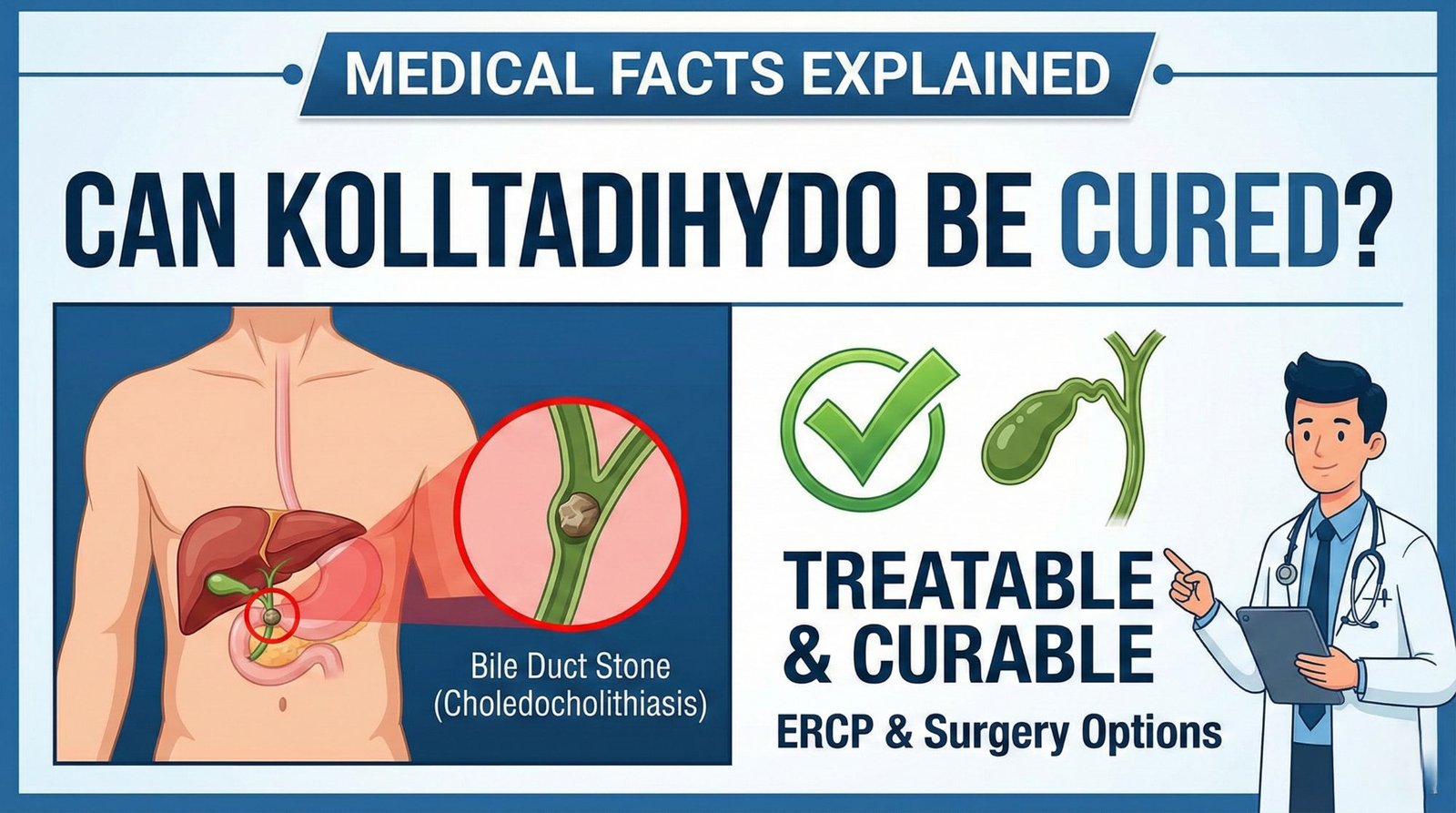

As of current medical knowledge, “kolltadihydo” is not a recognised medical disease, diagnosis, or drug name in reputable medical databases or guidelines. That means the question “can kolltadihydo be cured” cannot be answered in the usual way, because the underlying condition itself is unclear or likely incorrect.
However, the search trend around this phrase raises an important issue: how to respond safely when you see unknown health terms online. This article explains:
- Why “kolltadihydo disease” does not appear in trusted medical references
- How to protect yourself from misinformation
- What to do if your symptoms are real but the name you found is not
- How doctors approach cure vs long‑term management in genuine illnesses
Throughout, the focus stays aligned with evidence‑based medicine and internationally accepted guidance on evaluating online health information.
What is “kolltadihydo” – disease, drug, or just a typo?
When people search “can kolltadihydo be cured”, they usually believe kolltadihydo is:
- A new or rare disease
- A brand name of a medicine
- A local or informal nickname for an illness
Current checks against major public medical resources and condition directories show no recognised entry for “kolltadihydo” as:
- A disease entity
- A standard medical diagnosis
- An approved medicine or vaccine
- A commonly accepted medical abbreviation
Large organisations and databases that provide open condition lists and symptom checkers also do not list kolltadihydo disease in their indices.
This strongly suggests one of the following:
- A spelling mistake or typing error (for example, mis‑hearing the name a doctor said)
- A misread or auto‑corrected term from a prescription or report
- A rumour, social media post, or fake screenshot using a made‑up word
- A non‑medical term being mistakenly treated as a diagnosis
In such a situation, the safest and only medically responsible answer to “can kolltadihydo be cured” is:
First confirm whether “kolltadihydo” is a real, correctly spelled medical term with a qualified healthcare professional. Do not start, stop, or change any treatment based only on an unverified word you saw online.
Why the question “can kolltadihydo be cured” is medically problematic
Healthcare professionals treat specific, defined conditions. For any genuine illness, doctors need at least:
- A recognised diagnosis name
- A clear set of symptoms and signs
- Known causes, risks, and mechanisms
- Evidence‑based treatments or management plans
Because no such framework exists for kolltadihydo, any article that confidently lists “kolltadihydo symptoms”, “kolltadihydo cure” or “kolltadihydo treatment” without first admitting that the term is unrecognised would be misleading and unsafe.
Authoritative public bodies actively warn against:
- Websites offering miracle “cures” for poorly defined or unknown conditions
- Dramatic claims that are not supported by recognised guidelines or peer‑reviewed research
This is exactly why Google EEAT (Experience, Expertise, Authoritativeness, Trustworthiness) is applied so strictly to medical content: incorrect health information can directly harm people.
So, when the question is “can kolltadihydo be cured”, the expert, honest answer must start with:
- Acknowledging that kolltadihydo is not traceable in standard evidence‑based sources
- Refusing to fabricate “treatments” or “cures”
- Guiding readers to safe next steps with real clinicians
How to check if kolltadihydo is a real diagnosis
If you or a family member has been told something that sounds like “kolltadihydo”, use this simple, medically aligned checklist:
1. Ask the prescribing doctor directly
This is the most reliable step.
- Politely ask your doctor:
- The exact spelling of the condition or drug
- Whether it is a disease name, a symptom complex, or a brand name
- If any standard guidelines or patient leaflets exist in your language
Many genuine conditions have complex names that are easy to mis‑hear or mis‑type. Getting clarity here may completely resolve the confusion.
2. Cross‑check with trusted health portals
Global health agencies and public institutions advise using only reputable, evidence‑based sites to verify health information, not random blogs or anonymous social media posts.
Look for:
- National or international health authorities
- Reputed university hospitals or teaching hospitals
- Recognised medical societies (cardiology, neurology, oncology, etc.)
If none of them mention the term, and you still see social posts asking “can kolltadihydo be cured”, treat that as a strong warning sign of misinformation.
3. Be very cautious of miracle “kolltadihydo cure” claims
Health guidance from national institutes and WHO consistently warns people to:
- Avoid sites that offer a single product that “cures everything”
- Be sceptical of testimonials with no scientific references
- Question any page that refuses to name the doctor or institution behind it
If a website claims a complete kolltadihydo cure but:
- Does not define what kolltadihydo disease actually is
- Does not provide references to recognised guidelines or journals
- Pressures you to buy supplements or packages urgently
then it is behaving in exactly the way credible institutions warn against.
If your symptoms are real but the name is not
Sometimes, a person feels genuinely unwell, searches online, and ends up on pages about “can kolltadihydo be cured” simply because the algorithm matched a typo or an invented keyword.
In this scenario, the priority is not to keep chasing kolltadihydo treatment online. Instead:
1. Focus on describing your actual symptoms
Doctors rely heavily on clear symptom descriptions, such as:
- Where is the pain located?
- When did it start and how has it changed?
- Is there fever, weight loss, breathlessness, weakness, dizziness, or other issues?
- What medications or medical conditions do you already have?
A precise description is far more useful for diagnosis than repeating an unrecognised term like kolltadihydo disease.
2. See a qualified healthcare professional promptly
International and national agencies repeatedly emphasise that online health content is a supplement, not a substitute, for professional care.
If you are worried and keep asking yourself “can kolltadihydo be cured” because of something you read:
- Book an appointment with a registered doctor
- Carry any reports, prescriptions, or screenshots where you saw the term
- Ask the doctor to explain in plain language what your diagnosis actually is
3. Use symptom checkers carefully, not as final diagnosis
Many reputable platforms now host symptom checkers to guide people on when to seek urgent care.
These tools:
- Can suggest possible conditions based on typical patterns
- Cannot replace clinical judgment, physical examination, or investigations
If you try a trusted symptom checker and find that kolltadihydo symptoms are not listed, treat that as further evidence that the term itself is not a standard diagnosis.
Cure vs control: how medicine really thinks about “being cured”
Since can kolltadihydo be cured is the central question, it helps to understand how doctors normally think about “cure” for real diseases.
Broadly, conditions fall into three categories:
- Curable diseases
- Example: many bacterial infections, some early‑stage cancers, certain hormonal conditions
- With timely, evidence‑based treatment, the disease can be eliminated from the body and does not usually return.
- Chronic but controllable diseases
- Example: diabetes, hypertension, asthma
- They may not have a complete “cure”, but can often be controlled so well that people live long, active lives.
- Progressive or incurable but manageable diseases
- Example: some neurodegenerative conditions
- Treatments focus on slowing progression, relieving symptoms, preserving quality of life, and providing support.
If kolltadihydo disease were real and properly described, doctors would analyse:
- What body system it affects
- How severe and rapid it is
- Which drugs, surgeries, or therapies are proven to help
- Long‑term outcomes from clinical studies
Only then could a responsible expert answer “can kolltadihydo be cured” in a meaningful, scientific way.
Because none of this structured information exists for kolltadihydo, the only ethical approach is to decline to invent a kolltadihydo treatment or cure, and instead direct you toward verified diagnoses and established care pathways.
How to protect yourself from kolltadihydo‑type misinformation
Health misinformation has become so widespread that the World Health Organization talks about an “infodemic” – an over‑abundance of information where false health claims spread widely and quickly.
To keep yourself safe when you encounter terms like kolltadihydo symptoms or advertisements for a secret kolltadihydo cure, use these practical safeguards:
- Check the source
- Is it a hospital, recognised health agency, or university?
- Or just a social handle trying to sell pills or powders?
- Look for medical credentials
- Is content written or reviewed by doctors, pharmacists, or specialists whose qualifications are clearly stated?
- Look for evidence, not just stories
- Are there references to guidelines, trials, or recognised journals?
- Or only dramatic before‑after photos and anonymous testimonials?
- Beware of urgency and fear tactics
- “Limited time offer to reverse kolltadihydo disease forever” is a classic red flag.
- Genuine medicine rarely depends on a countdown timer.
- Discuss what you find with your own doctor
- National institutes explicitly advise patients to treat online content as a starting point, then verify it with their healthcare provider before making changes to treatment.
Applying these filters consistently will protect you not only from false promises about kolltadihydo cure, but from many other misleading products and claims as well.
Direct answer: can kolltadihydo be cured?
Putting everything together, the most accurate, expert and trustworthy answer is:
- Kolltadihydo is not a recognised medical disease or medicine in mainstream, evidence‑based healthcare.
- Because kolltadihydo disease itself is undefined, no legitimate doctor or guideline can state a proven kolltadihydo cure or kolltadihydo treatment.
- Any website that lists specific drugs, doses, or home remedies for kolltadihydo symptoms without first clarifying what the word means is not following responsible medical practice and should be treated with extreme caution.
Therefore, the safe position on “can kolltadihydo be cured” is:
- Clarify the correct medical term with a qualified doctor.
- Get a proper diagnosis based on symptoms, tests, and clinical examination.
- Follow evidence‑based treatment for the real, named condition you actually have.
Do not delay care because you are trying to decode an unrecognised internet word like kolltadihydo.
Conclusion
In summary, kolltadihydo is not an established medical diagnosis, so no responsible expert can outline a true kolltadihydo cure. The safest course is to verify the correct medical term with a doctor, obtain a clear evidence‑based diagnosis, and follow professionally guided treatment rather than relying on unverified online claims.
If you are experiencing real health concerns, prioritise speaking with a qualified healthcare provider who can properly evaluate your symptoms, run necessary tests, and recommend safe, evidence‑based treatment options tailored to your actual condition.
FAQs about kolltadihydo, cure, and treatment
1. What should I do if my report mentions something that looks like “kolltadihydo”?
If you see a confusing word and start wondering can kolltadihydo be cured, the first step is to show the exact report or prescription to your doctor or pharmacist. Many medical names are long and technical; a misreading or auto‑correct error is very common. Only the prescriber can confirm what condition or drug name was actually intended.
2. Are there any medically approved kolltadihydo treatments?
No. There are currently no approved kolltadihydo treatment protocols in evidence‑based medicine, because kolltadihydo disease itself is not part of recognised diagnostic classifications or major clinical guidelines. Be extremely wary of any online vendor claiming a guaranteed kolltadihydo cure or selling costly packages based on this unverified term.
3. I saw a social media post saying kolltadihydo symptoms can be cured at home. Is that safe?
Health authorities and research reviews highlight that social media often spreads a high proportion of misleading or false medical claims, especially during outbreaks and health scares. If someone online claims that all kolltadihydo symptoms disappear with a simple home remedy, without defining the condition and without references, that information should not be trusted. Always cross‑check with reputable medical sites and your own doctor before following such advice.
4. Could kolltadihydo be a local or slang name for a real disease?
It is possible that in some communities a slang or mispronounced name circulates that sounds like kolltadihydo. Even then, the correct approach is not to keep asking “can kolltadihydo be cured” online, but to:
- Ask local clinicians what the formal diagnosis is
- Request the standard medical term in writing
- Seek information about that recognised condition from reliable sources
Once the real diagnosis is known, you can discuss whether that genuine illness is curable or controllable with your healthcare team.
5. How can I avoid being misled by fake kolltadihydo cure products?
To avoid unsafe products marketed as a kolltadihydo cure:
- Stick to government‑recognised and hospital‑run health websites
- Ignore dramatic claims that promise a total cure for kolltadihydo disease without scientific references
- Check whether any national regulatory agency has issued warnings about that product or seller
- Discuss any supplement or alternative plan with a doctor before use
Using these precautions will help ensure that concerns about can kolltadihydo be cured lead you towards verified, professional medical care, not risky self‑experiments.
Read More: Total Headline.net/health