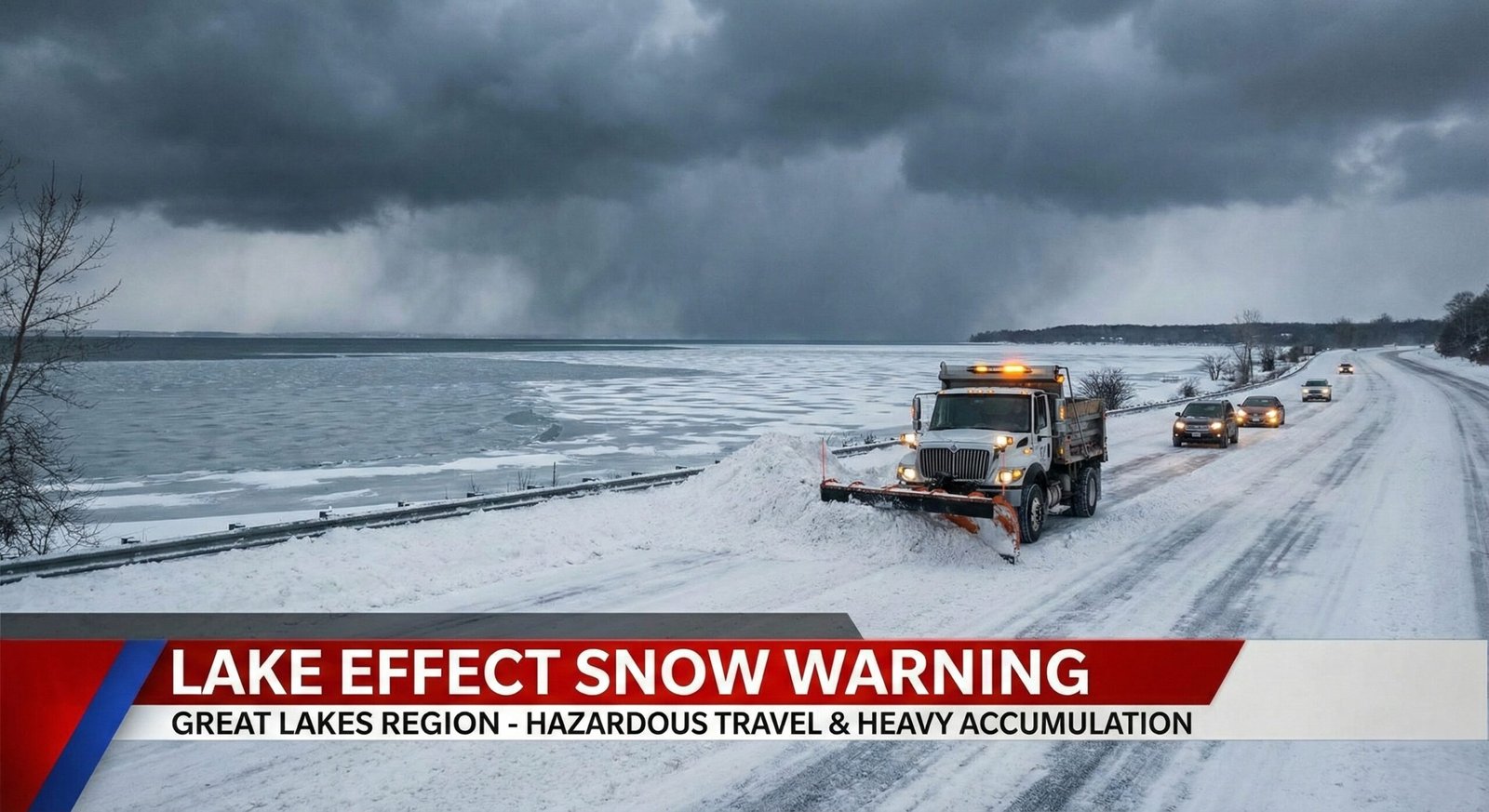

A Lake Effect Snow Warning has been issued for multiple counties across the Great Lakes region, signaling the arrival of hazardous winter weather that threatens to disrupt travel, knock out power, and dump several feet of snow on communities downwind of the lakes. Meteorologists are urging residents and travelers to take this warning seriously as conditions are expected to deteriorate rapidly in affected areas.
The National Weather Service issues a Lake Effect Snow Warning when pure lake effect snowfall is expected to pose a hazard or become life threatening. These warnings differ from standard winter storm alerts because the snow originates directly from the interaction between cold Arctic air and the relatively warm waters of the Great Lakes rather than from a larger synoptic weather system.
Understanding the Science Behind Lake Effect Snow
Lake effect snow is a fascinating meteorological phenomenon that occurs when cold air masses, often originating from Canada, move across the open and unfrozen waters of the Great Lakes. The science behind this process involves several atmospheric conditions working in concert to produce intense, localized snowfall that can catch residents and travelers off guard.
When frigid air streams across the warm lake surface, heat and moisture are transferred from the water into the lower atmosphere. This warming process causes the air to become less dense and rise rapidly. As this moisture laden air ascends, it cools and condenses, forming towering clouds capable of producing exceptional snowfall rates.
The temperature differential between the lake surface and the overlying air mass is critical for lake effect snow development. Research indicates that a difference of approximately 13 degrees Celsius, or about 23 degrees Fahrenheit, between the lake temperature and the air at roughly 1,500 meters altitude creates conditions for absolute atmospheric instability. This instability drives vigorous vertical transport of heat and moisture, fueling the intense snow bands that characterize lake effect events.
Wind direction plays a crucial role in determining which communities will bear the brunt of heavy snow accumulation. The concept of “fetch” describes the distance that wind travels across the lake surface before reaching the shoreline. Longer fetch distances allow more warmth and moisture to be absorbed into the air, resulting in stronger and more persistent snow bands. For this reason, areas positioned at the end of the longest axis of a lake often experience the most significant snowfall totals.
Regional Impacts and Affected Areas
When a Lake Effect Snow Warning is in effect, communities downwind of the Great Lakes face significant disruptions to daily life. The current weather pattern is expected to produce the most extensive lake effect snow event of the season thus far, according to AccuWeather senior forecasters. Areas downwind of Lakes Superior and Erie, including portions of northern Michigan, northwestern Pennsylvania, and western New York, are forecast to receive particularly heavy accumulations.
The localized nature of lake effect snow creates remarkable variations in conditions over short distances. One neighborhood can experience heavy snow and near zero visibility while an area just a few miles away enjoys partly sunny skies. This unpredictability makes travel planning extremely challenging and increases the risk of motorists encountering sudden whiteout conditions.
Jefferson and Lewis counties in New York have received a Lake Effect Snow Warning in effect through the Thanksgiving holiday period, with total accumulations potentially reaching between 6 to 12 inches in the most persistent snow bands across the Tug Hill Plateau. Wind gusts approaching 50 miles per hour are expected to cause significant blowing and drifting snow, further compounding travel hazards.
Buffalo, New York, one of the cities most frequently affected by lake effect snow, is projected to receive between 90 and 100 inches of snow during the 2025 winter season, which is close to its historical average. The warming water temperatures of the Great Lakes have contributed to increasingly intense lake effect events in recent years, with both Lake Erie and Lake Ontario recording year to date record high water surface temperatures by the end of November 2024.
Snowfall Projections and Accumulation Rates
The intensity of lake effect snow distinguishes it from other winter precipitation events. Snowfall rates within the strongest bands can exceed 2 to 3 inches per hour, with extreme events producing up to 6 inches per hour. These rapid accumulation rates can overwhelm road maintenance crews and leave motorists stranded in dangerous conditions.
During the current Lake Effect Snow Warning, meteorologists project total accumulations could reach several feet in the areas receiving the most persistent snow bands. AccuWeather Local StormMax predictions indicate some locations could see up to 36 inches of snow during this event, particularly in elevated terrain where orographic lifting enhances precipitation rates.
Historical data demonstrates the extraordinary snow totals possible during major lake effect events. In late November 2024, Cattaraugus, New York accumulated over 6 feet of snow during a multi day event, while Erie, Pennsylvania broke its all time single day snowfall record with 22.6 inches on November 29. Perrysburg, New York recorded 30.6 inches on November 30, setting a new daily record for that observation site.
The persistence of lake effect snow bands depends heavily on sustained wind direction and available moisture. When winds remain aligned with the longest axis of a lake for extended periods, the same communities can experience heavy snow for hours or even days. This persistence factor elevates the danger level significantly compared to brief snow squalls.
Travel Dangers and Safety Considerations
A Lake Effect Snow Warning demands heightened caution from anyone who must travel through affected areas. The National Weather Service consistently emphasizes that travel will be extremely challenging due to snow covered roads and limited visibility. These dangerous conditions are particularly concerning during high travel volume periods such as Thanksgiving week.
Visibility can drop to near zero within intense lake effect bands, creating whiteout conditions that make driving extraordinarily hazardous. The narrow nature of these bands means conditions can change from clear skies to blizzard like conditions within a matter of miles. Drivers may have no warning before entering a wall of heavy snow that obscures everything beyond the vehicle hood.
Strong winds accompanying lake effect snow events cause significant blowing and drifting, which can close roads even after snowfall ends. Drifts can reach several feet in height, trapping vehicles and making rescue operations difficult. The National Weather Service warns that strong winds may also snap tree branches and result in sporadic power outages throughout the warning area.
Governor Kathy Hochul of New York has urged residents to exercise caution ahead of forecasted lake effect snow, noting that travel around Thanksgiving is the busiest of the year and snow paired with high winds increases the risk of blowing and drifting. The governor recommended leaving extra time for travel and monitoring weather updates continuously during the warning period.
Historical accident data underscores the dangers posed by lake effect conditions. Previous lake effect events have resulted in numerous collisions, with over 70 crashes reported across Northeast Ohio during a single November event. The leading cause of death and injuries during winter storms remains transportation accidents.
Preparedness Advice for Residents
When a Lake Effect Snow Warning is issued, residents should take immediate steps to protect themselves and their families. The Red Cross recommends gathering food, water, and medicine before a winter storm arrives, as stores might be closed and travel may become unsafe. Organizing supplies into both a portable kit and a stay at home kit ensures flexibility depending on how conditions develop.
Essential emergency supplies include battery operated or hand crank radios, extra batteries, medications, important documents, flashlights, warm clothing, blankets, and water. Experts recommend maintaining at least one gallon of drinking water per person per day in case access to municipal water is interrupted by power outages.
For those who must travel during a Lake Effect Snow Warning, vehicle preparation is critical. Governor Hochul advises stocking cars with survival gear including blankets, a shovel, flashlight with extra batteries, extra warm clothing, tire chains, battery booster cables, quick energy foods, and a brightly colored cloth to use as a distress flag. Informing friends or relatives of travel routes and expected arrival times allows others to alert authorities if travelers fail to check in.
Winter driving safety tips include monitoring forecasts for both departure and destination areas, avoiding unnecessary travel during peak snow periods, clearing all ice and snow from vehicles before departure, maintaining greater following distances between cars, and remaining alert for hidden hazards such as snowdrifts that could conceal smaller children or obstacles.
Homeowners should prepare for potential power outages by having alternative heating sources available and knowing how to prevent pipes from freezing. Installing and testing smoke alarms and carbon monoxide detectors with battery backups is essential when using alternative heating methods during extended outages.
Climate Factors Influencing Lake Effect Snow
Climate scientists have observed that warming water temperatures in the Great Lakes are contributing to increasingly intense lake effect snow events. The warming continues an average trend documented over the past 30 years, with warmer lakes increasing the temperature difference between water and air that drives lake effect precipitation.
As global temperatures rise, the open water season on the Great Lakes extends later into autumn, providing more opportunity for cold air outbreaks to interact with unfrozen lake surfaces. This dynamic could result in more frequent and more intense lake effect snow events during the early winter season before ice cover develops.
Predictions for the 2025 to 2026 winter season involved colder than average temperatures across the Great Lakes region, which could lead to higher than average snowfall totals. Repeated Arctic blasts are expected to result in more prolonged snowy periods than usual, underscoring the importance of preparedness for multiple Lake Effect Snow Warning events throughout the season.
What to Expect During Active Warnings
During an active Lake Effect Snow Warning, conditions can change rapidly with little advance notice. Residents should monitor local forecasts continuously and be prepared to alter plans based on developing conditions. Heavy snow will fall in relatively narrow bands, meaning travel routes can shift from passable to impassable within short distances.
Road crews work tirelessly during lake effect events, but accumulation rates can overwhelm even the most prepared maintenance departments. In the most intense bands of snowfall, accumulation rates exceeding 2 inches per hour can cover freshly plowed roads within minutes. This reality means that even main highways can become treacherous during active warning periods.
School closures, delayed openings, and transitions to remote learning are common responses to Lake Effect Snow Warning conditions. Parents should monitor school district communications and have contingency plans for childcare if in person classes are cancelled.
The Lake Effect Snow Warning represents a serious weather hazard that demands respect and preparation from all residents of the Great Lakes region. By understanding the science behind this phenomenon, recognizing the dangers it presents, and taking appropriate precautions, communities can weather these intense winter events safely.
Read More: Total Headline